

Mouser’s autonomous vehicle resource centre addresses real-world deployment challenges
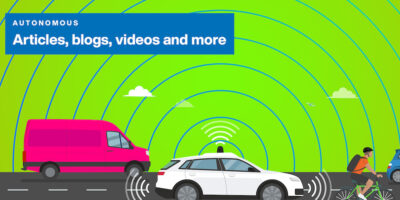
Mouser has expanded its Autonomous Vehicle (AV) resource centre focused on the system architectures and design constraints shaping production-ready autonomy. The hub examines how sensing, in-vehicle networking, and vehicle-to-everything (V2X) communications feed real-time decision systems, and why safety, cybersecurity, and ethical edge cases increasingly define what “deployable” means in the field.
For widespread, real-world deployment of autonomous vehicles, engineers must balance deterministic performance, functional safety, and cybersecurity while ensuring they can make safe and ethical decisions on the road. Robotaxi services have clearly illustrated the challenges of real-world use with continued technical barriers. To address these issues, AV designers are integrating high-bandwidth sensing, in-vehicle networking, and continuous over-the-air (OTA) software updates into architectures that can be certified, serviced, and evolved over time. These pressures are accelerating the move toward software-defined vehicles and zonal architectures, which separate sensing and actuation from centralised compute to reduce wiring complexity, improve fault isolation, and enable modular system evolution beyond initial deployment.
Developed with input from Mouser’s technical team and manufacturer partners, the AV Resource Hub provides a curated library of articles, blogs, eBooks, and product information designed to help engineers evaluate real-world deployment tradeoffs. Topics span perception and sensor fusion, deterministic networking, functional safety and cybersecurity, ethical decision logic, and regulatory considerations, framed through the lens of practical system integration rather than lab-only performance.