

ST and Leopard accelerate robotics vision with NVIDIA multi-sensor module
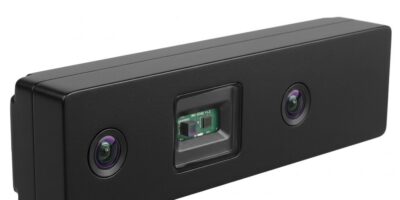
ST and Leopard Imaging have introduced an all-in-one multimodal vision module for humanoid and other advanced robotics systems. Combining ST imaging, 3D scene-mapping, and motion sensing with the NVIDIA Holoscan Sensor Bridge technology, the module integrates natively with NVIDIA Jetson and NVIDIA Isaac open robot development platform, simplifying and accelerating vision system design within the size, weight, and power constraints of humanoid robots.
Powered by the NVIDIA Holoscan Sensor Bridge, the new module integrates seamlessly with NVIDIA Jetson over ethernet for real-time sensor data ingestion and NVIDIA Isaac open robot development platform, which offers open AI models, simulation frameworks and libraries for developers. The new module includes a build system and application programming interfaces (APIs), artificial intelligence (AI) algorithms curated for mobile robots, sample applications, domain randomisation, and a simulation environment containing sensor models.
ST continues to integrate its sensors, drivers, actuators, controllers, and development tools into the NVIDIA robotics ecosystem as a key NVIDIA robotics and edge AI partner, including high-fidelity models and proof-of-concept modules.
For vision-based sensing, the ST VB1940 automotive-grade RGB-IR 5.1-megapixel image sensor with combined rolling shutter and global shutter modes. ST has also released a mass market and industrial version V**943, part of the ST BrightSense product family, existing in monochrome or RGB-IR, in die or packaged sensor.
For motion sensing, the LSM6DSV16X 6-axis inertial measurement unit (IMU) embeds ST machine-learning core (MLC) for AI in the edge, sensor-fusion low-power (SFLP), and Qvar electrostatic sensing for user-interface detection.
For 3D depth sensing, the VL53L9CX dToF all-in-one LiDAR module, part of the ST FlightSense product family, provides 3D depth sensing with accurate ranging up to 9 meters. With its resolution of 54 x 42 zones (near 2,300 zones) combined with a wide 55°x42° FoV providing 1° angular resolution, short and long-distance measurements and small objects detection are achievable at up to 100 fps.