

Ventiva zoned cooling design enables targeted air cooling for AI Edge devices
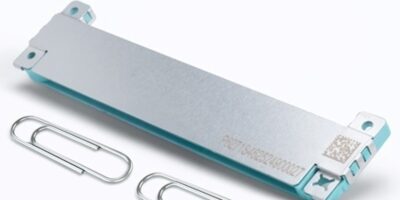
Ventiva has introduced a new architectural approach to thermal management that can transform how heat is managed in electronic devices, as the embedded systems industry gathers for Embedded World 2026. Ventiva’s Zoned Cooling design uses the company’s ionic cooling technology to position airflow by zone and reduce system impedance, delivering targeted air to specific heat-generating components, such as CPUs, memory, storage, or sensors, rather than pushing air across an entire system.
AI is fundamentally changing system architectures: embedded intelligence, higher sustained workloads, and increased on-device inference are creating hotspots that conventional fan-based cooling solutions cannot efficiently address. As thermal demands outpace the physical limits of mechanical fans, new thermal management approaches are not optional but necessary.
Unlike traditional designs that use a fan-based, centralised approach for system cooling, Zoned Cooling uses Ventiva ionic cooling solutions – which are compact, modular, and free of bulky, noisy, rotating components, to deliver targeted cooling. This provides designers with flexibility and enables scalable thermal management tailored to specific system needs.
Zoned Cooling design is enabled by Ventia’s ionic cooling technology which leverages the principles of electrohydrodynamics (EHD) to create air flow. EHD is a science that intersects physics, engineering, and fluid dynamics to move ionized air molecules within an electric field.
Ventiva’s thermal management subsystem, which is comprised of a Ventiva ionic cooling device, fin stack, and vapour chamber or heat pipe, generates air movement without any moving parts, noise, or vibration. It is a highly modular solution that continuously self-monitors its operation, delivering the airflow a system requires.
Ventiva’s ionic cooling technology has already been validated in high power-density laptop environments, where space and noise constraints are significantly tighter than in larger intelligent edge platforms.
In its AI-ready laptop reference design, Ventiva demonstrated support for a 28 W CPU and 44.3 W total platform power within a sub-16 mm chassis using three 62 mm Ventiva modules arranged in parallel. The architecture reclaims approximately 7,200 mm² of motherboard area by eliminating traditional fan assemblies and repositioning venting to the rear edge.