

Solid Sands to address toolchain trust for physical AI at Robotics Summit
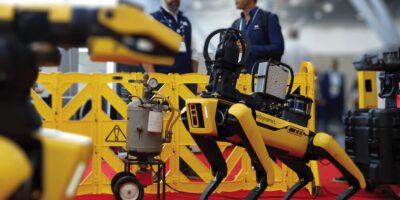
Solid Sands will participate in the Robotics Summit & Expo 2026 (27–28 May, Boston, USA). Solid Sands will engage with robotics developers, system integrators and safety experts on the growing importance of trusted software toolchains in autonomous systems, Physical AI and software-defined industrial platforms.
The company’s Chief Product Officer, Sjoerd van der Zwaan, will deliver a session entitled “Trusting the Machine That Builds the Machine” on 27 May at 10:15 EDT in the Engineering Theater. The session will address the often-overlooked “silent risk” of toolchains: the reality that latent compiler or library defects can systematically corrupt the core THINK and ACT loops of robotic systems.
Embodied AI systems move from research environments into factories, warehouses and public spaces. Modern autonomous systems increasingly depend on complex software stacks combining AI-driven perception, planning and real-time motor control, much of it implemented in C and C++. In these systems, the correctness of compilers and libraries directly affects how machines perceive, decide, and act in the physical world.
Sjoerd van der Zwaan explains: “Embodied intelligence only makes sense when perception and action are safe. The challenge is to make robots intelligent while ensuring reliable interaction with the real world. Toolchains are part of that trust chain. If the toolchain cannot be trusted, neither can the robot.”
The topic aligns closely with emerging regulatory developments, including the EU Machinery Regulation, the AI Act and the Cyber Resilience Act, which recognise software and toolchains as explicit elements of functional safety and compliance. In particular, robotics systems using AI are increasingly treated as high-risk machinery, requiring demonstrable evidence that the underlying software infrastructure is trustworthy and continuously controlled.
At the same time, robotics platforms are perpetually evolving through software updates, cybersecurity patches, middleware integration and changing hardware targets. These changes can invalidate previously established qualification assumptions, creating what is commonly known as the “update paradox”: the need to evolve software rapidly while preserving confidence in safety and compliance.
Marcel Beemster, CTO of Solid Sands, comments: “You cannot realistically freeze a toolchain across the lifecycle of a modern autonomous system, if only because of the necessity to apply security updates. Qualification must be continuous and evolve alongside the software itself. This allows assurance to scale with change, while reducing long-term certification risk and effort.”